
When is it every a good time to have a business dispute? Certainly, these things happen. But there is a game companies play called, “leverage”. It hurts most when it happens at the wrong time, like during a day with major sporting events. The dispute between Disney and DirecTV escalated into a full-blown blackout this past weekend, affecting millions of viewers across the United States. This development came at a critical time in the sports calendar, with major events like college football, the U.S. Open tennis tournament, and the upcoming NFL season now inaccessible to DirecTV subscribers.
Impact on Viewers
Content Access: Millions of viewers are caught in the middle, losing access to popular channels and live sports events during a critical time in the sports calendar. The blackout left over 11 million DirecTV subscribers without access to popular Disney-owned channels, including:
- ESPN and its affiliated networks
- ABC stations
- FX
- National Geographic
- Freeform
Pricing Concerns: The dispute underscores the ongoing debate about the cost of pay-TV services and whether consumers are getting value for their money.
This loss of content is particularly significant for sports fans, who are now unable to watch highly anticipated events and games.
Timing and Negotiations
The carriage agreement between Disney and DirecTV expired on Sunday, September 1, 2024, after weeks of negotiations failed to produce a new deal. Disney has been through the same with Sling and others in the past. The timing of this blackout is especially problematic, coinciding with:
- The start of the college football season
- The final week of the U.S. Open tennis tournament
- The imminent beginning of the NFL season
Company Positions
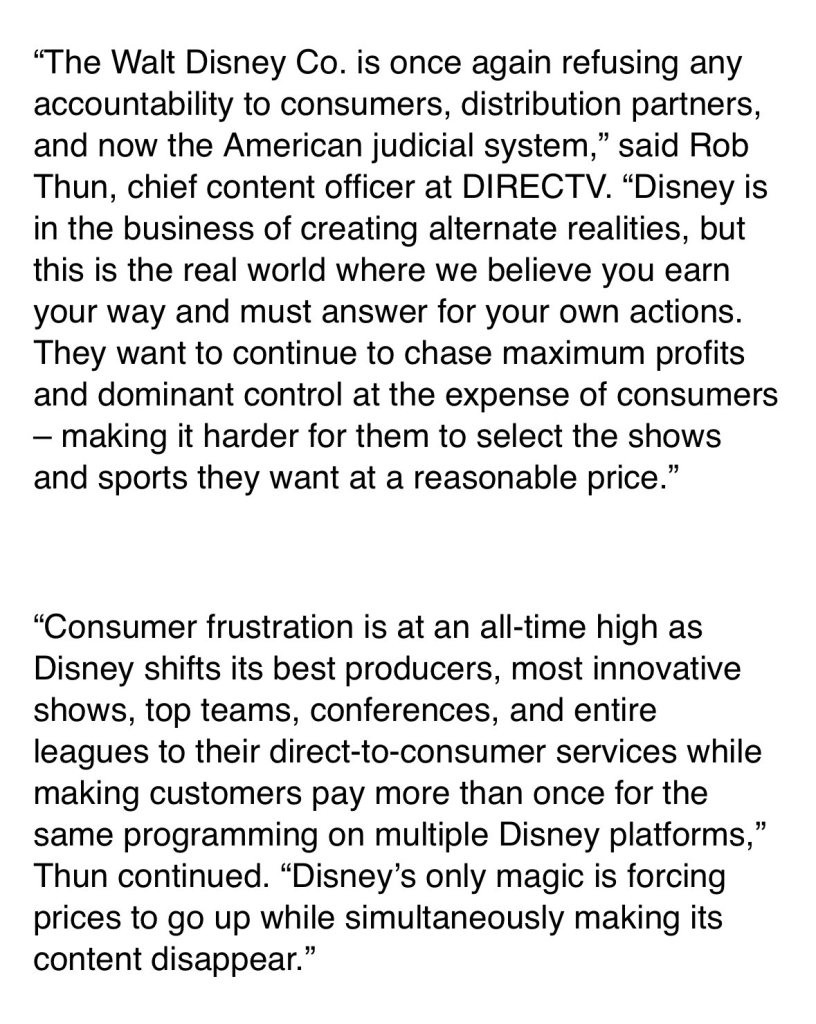
DirecTV’s Stance: DirecTV argues that Disney is pursuing maximum profits at the expense of consumers. They claim to have proposed more flexible, thematically focused bundles, including a sports-centric package, which Disney allegedly rejected.
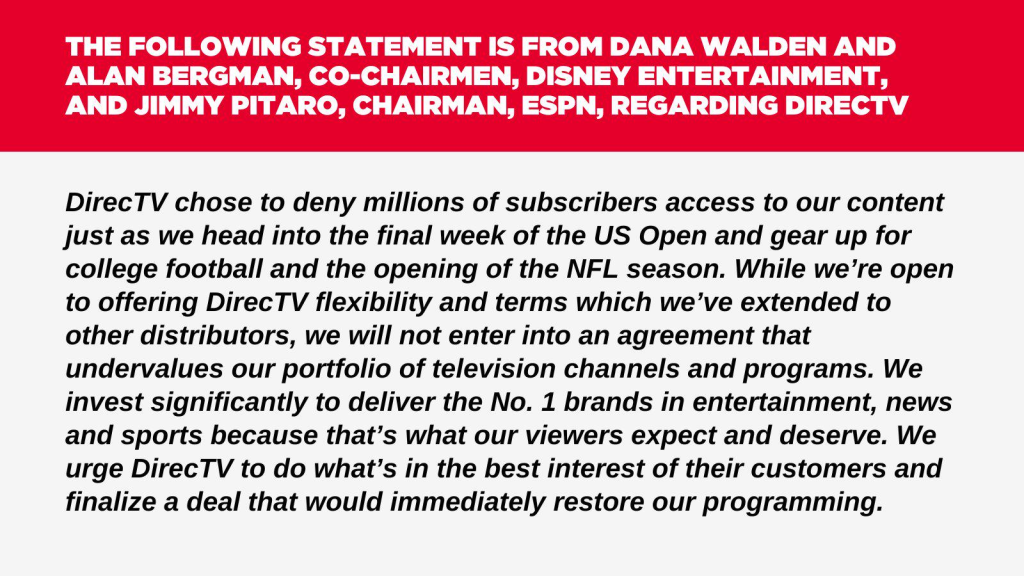
Disney’s Response: Disney maintains that they have offered flexible terms similar to those accepted by other distributors. They assert that DirecTV has not engaged seriously with their proposals for streamlined channel packages.
Industry Implications
Bundling vs. A La Carte: This dispute highlights ongoing tensions in the media industry. The dispute highlights the tension between traditional bundling practices and the growing demand for more flexible, customizable TV packages.
Sports Rights: The high cost of sports programming, particularly from ESPN, is a central issue in these negotiations, reflecting the broader challenge of balancing content costs with consumer affordability.
Streaming Competition: As traditional TV providers and content creators clash, it may further accelerate the shift towards streaming services, potentially reshaping the entire media landscape.
Impact on Disney
Brand Perception: Disney risks alienating viewers who may blame the company for losing access to popular channels and content. This could potentially damage Disney’s reputation as a family-friendly entertainment provider.
Revenue Loss: The blackout means Disney will lose carriage fees from DirecTV for its channels, which could impact its bottom line, especially considering the high fees commanded by ESPN.
Streaming Push: This dispute may accelerate Disney’s shift towards direct-to-consumer streaming services like Disney+ and ESPN+, as it seeks to reduce dependence on traditional cable distributors.
Impact on DirecTV
Subscriber Churn: DirecTV faces the risk of losing subscribers who value Disney’s content, particularly sports fans who rely on ESPN for live events. This could exacerbate the ongoing trend of cord-cutting.
Negotiating Power: By taking a stand against Disney’s bundling practices, DirecTV is attempting to gain leverage in negotiations and potentially reshape its offerings to be more flexible and consumer-friendly.
Financial Pressure: The loss of popular channels may force DirecTV to offer discounts or credits to retain customers, impacting its revenue in the short term.
Historical Context
This is not the first such dispute for Disney. In 2023, a similar standoff with Charter Communications resulted in a 12-day blackout. These recurring conflicts underscore the changing dynamics of the television industry and the challenges faced by both content providers and distributors in adapting to new consumer preferences and technologies.
As negotiations continue, both companies face pressure to resolve the dispute quickly, especially with high-profile sporting events on the horizon. The outcome of this standoff could have significant implications for the future of content distribution and the structure of pay-TV packages.
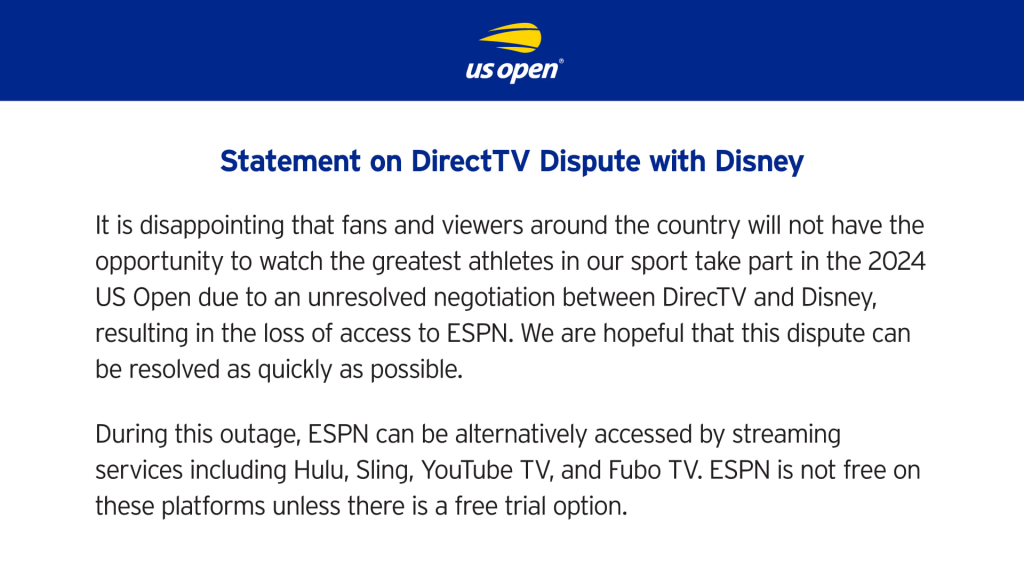
Packed House Sports statement:
Packed House Sports does not take a stance on the ongoing dispute between Disney and DirecTV; instead, we aim to present the facts as they emerge. The recent blackout of Disney-owned channels, including ESPN and ABC, has left over 11 million DirecTV subscribers without access to critical sports programming just as major events unfold, such as the U.S. Open and the start of the college football season.
Both companies have expressed their positions: Disney insists that it will not undervalue its channels and programming, while DirecTV argues for more flexible and consumer-friendly packaging options. As negotiations continue, our focus remains on delivering accurate updates and insights to our sports audience, allowing them to understand the implications of this dispute without bias.
September 14, 2024 Update
DirecTV and The Walt Disney Company have reached an agreement to restore Disney-owned channels, including ESPN, following a two-week blackout that affected major events like Monday Night Football and a presidential debate. The deal, which marks the end of a tense negotiation period, will allow DirecTV to offer more flexible programming bundles, including sports, while providing Disney with increased fees for channel carriage. The channels were reinstated just in time for upcoming college football games and the second week of Monday Night Football.