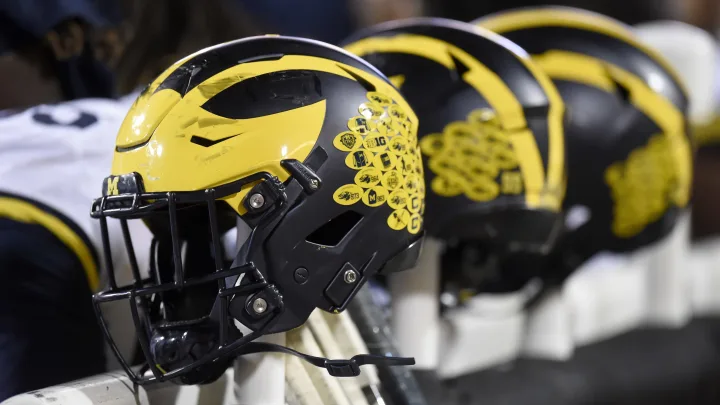
More news on the NIL front as four former University of Michigan football stars have filed a class-action lawsuit against the NCAA and Big Ten Network, seeking over $50 million in damages for alleged exploitation of their name, image, and likeness (NIL). The lawsuit, led by former quarterback Denard Robinson and wide receiver Braylon Edwards, along with defensive end Mike Martin and linebacker Shawn Crable, represents a significant challenge to the long-standing practices of college sports organizations.
The Lawsuit
The plaintiffs claim they were “wrongfully and unlawfully denied” the opportunity to profit from their NIL during their collegiate careers. The lawsuit alleges that the NCAA and Big Ten Network “have systematically exploited these iconic moments” created by the players during their time at Michigan.
Key points of the lawsuit include:
- It covers Michigan athletes who played prior to 2016.
- The plaintiffs argue they are entitled to “a present and future share of any revenue generated from the use of their publicity rights”.
- The suit mentions that the Big Ten Network has aired classic Michigan football games for nearly two decades without compensating players.
Background and Context
This legal action comes in the wake of significant changes in college sports:
- In 2021, the NCAA approved interim NIL policies, allowing current college athletes to profit from their name, image, and likeness.
- In May 2024, the NCAA and power conferences settled three major antitrust lawsuits, agreeing to pay approximately $2.7 billion in damages to athletes who played from 2016 to the present.
Potential Implications
This lawsuit could have far-reaching consequences for college sports:
Precedent Setting: If successful, it could open the floodgates for similar lawsuits from former athletes at other universities.
Financial Impact: The NCAA and collegiate sports networks, especially those playing the old classic games, may face significant financial liabilities if required to compensate former athletes retroactively.
Policy Changes: It may force the NCAA to reconsider its policies regarding the use of former athletes’ likenesses in broadcasts and merchandise.
Broader NIL Discussion: The case could reignite debates about the fairness of NIL policies and their application to past athletes.
Attorney Jim Acho, who filed the lawsuit, expects this to be the first of many player-led lawsuits against the NCAA. He stated, “Numerous former players over the past five decades asked me to file this, and after a lot of research we felt it was absolutely the right thing to do”.
How Far Reaching Might The Impact Be?
This lawsuit against the NCAA and Big Ten Network by former Michigan football stars could have several significant impacts on the NCAA’s current NIL policies:
- Retroactive compensation: If successful, this lawsuit could force the NCAA to consider retroactive NIL compensation for athletes who played before the current NIL rules were implemented in 2021. This would be a major shift, as current policies only allow active student-athletes to profit from their NIL.
- Expanded rights for former athletes: The lawsuit may pressure the NCAA to develop policies regarding the use of former athletes’ likenesses in broadcasts and merchandise, potentially requiring compensation for such use.
- Reevaluation of existing NIL framework: The legal challenge could prompt the NCAA to reassess its current NIL policies to avoid future lawsuits. This may lead to more comprehensive and clearly defined rules regarding NIL rights and compensation.
- Increased scrutiny of media partnerships: The inclusion of the Big Ten Network in the lawsuit may force the NCAA to reconsider its relationships with media partners and how revenue from classic game broadcasts is shared.
- Acceleration of revenue-sharing models: This case could expedite the development of revenue-sharing models between schools and athletes, similar to those proposed in recent settlements.
- Potential federal intervention: The lawsuit may increase pressure on Congress to pass federal NIL legislation, which the NCAA has been lobbying for to create uniform standards and protect itself from future antitrust claims.
- Compliance challenges: If successful, the lawsuit could create new compliance challenges for the NCAA and its member institutions, requiring them to develop systems for tracking and compensating both current and former athletes for NIL usage.
- Broader definition of NIL rights: The case may lead to an expansion of what constitutes NIL rights, potentially including revenue from media broadcasts and other previously unexplored areas.
- Financial implications: The NCAA and its member institutions may need to reassess their financial models to account for potential retroactive payments and ongoing NIL compensation to a broader group of athletes.
- Shift in amateurism concept: This lawsuit could further erode the NCAA’s traditional concept of amateurism, potentially leading to a more professionalized model of college athletics.
These potential impacts highlight the ongoing evolution of NIL policies in college sports and the significant challenges the NCAA faces in adapting to this new landscape.
Additionally, this lawsuit filed by former Michigan football stars against the NCAA and Big Ten Network could significantly reshape the recruitment process for college athletes. If successful, it may lead to increased transparency in NIL discussions during recruitment, allowing for more open negotiations about potential earnings before athletes commit to a school. This could result in a shift towards more business-like recruiting strategies, with schools showcasing their NIL networks and partnerships to attract top talent. The recruitment landscape is already more competitive, so this would potentially exacerbate bidding wars among institutions and their associated NIL collectives.
Further, the recruitment process could become more complex for athletes and their families, requiring them to weigh not just athletic and academic factors, but also potential NIL earnings at different schools. This may lead to an increased focus on an athlete’s marketability and brand value during recruitment, alongside their athletic abilities. The need for insertion of advisors and legal representatives in the recruitment process could expand, helping athletes navigate these new considerations. These changes could potentially alter the timing of commitments and create regional disparities in recruitment advantages based on state NIL laws and market sizes.
As this case unfolds, it will undoubtedly be closely watched by former college athletes, universities, and sports organizations across the nation. The outcome could potentially reshape the landscape of collegiate sports and the rights of student-athletes, both past and present.