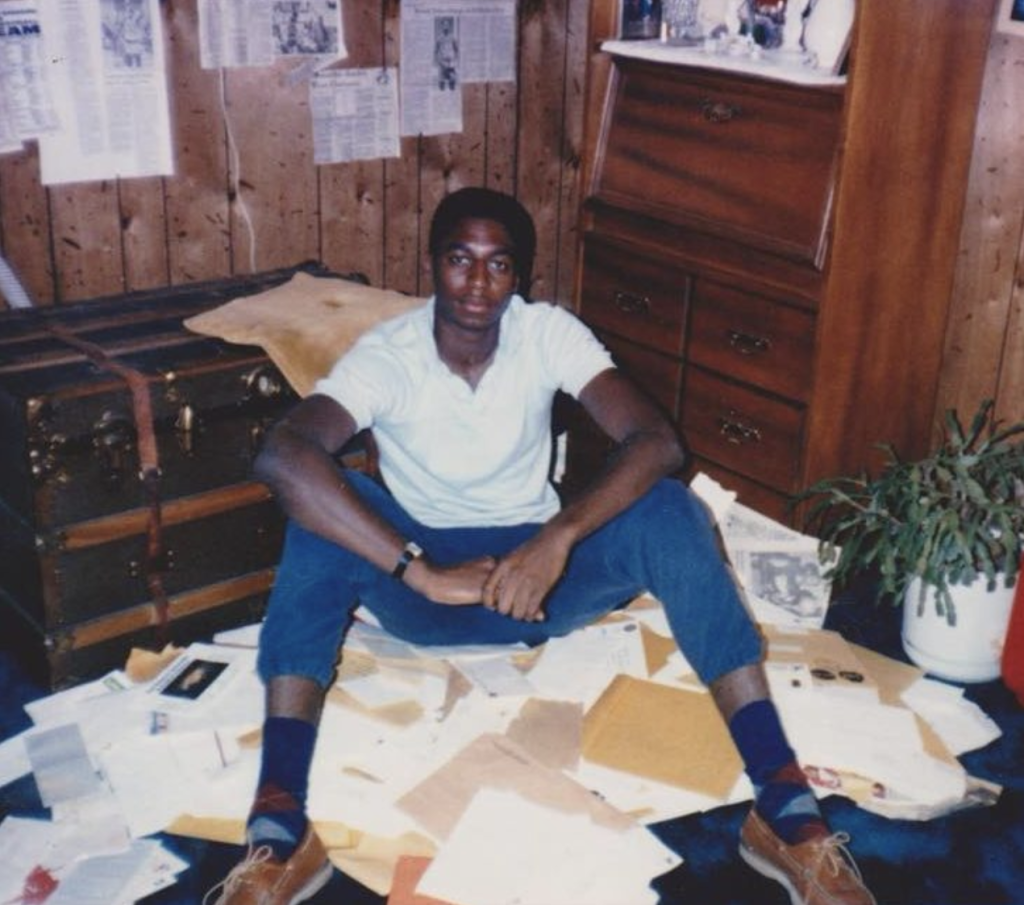
Jerrod Mustaf, once a celebrated figure in American basketball, leaves behind a complex legacy that intertwines athletic promise with profound personal tragedy. The former NBA player, who was a standout at the University of Maryland and a three-time Parade All-American in high school (a graduate of DeMatha Catholic High School where he was a 3-time All-American basketball player, Maryland State Player of the Year and Washington D.C.’s Mr. Basketball in 1988), was found dead at the age of 55. The circumstances surrounding his death remain unclear, but his life story is one filled with both triumph and turmoil.
A Promising Start
Born in North Carolina, Mustaf’s journey began on the hardwood, where he quickly made a name for himself. His high school accolades earned him a spot in prestigious games like the McDonald’s All-American Game and the Capital Classic. At the University of Maryland, he shined bright, averaging 16.6 points and 7.7 rebounds in his sophomore season, and was a key player under coach Gary Williams.
“Jerrod was a very talented big man who was very skilled in all phases of the game,” Williams remarked, underscoring the potential that once seemed boundless.
In 1990, Mustaf was drafted 17th overall by the New York Knicks, joining a team that was on the cusp of greatness. However, his NBA career, which spanned four seasons, would be marked by disappointing statistics—averaging just 4.0 points and 2.5 rebounds across 179 games. After a solitary season in New York, he was traded to the Phoenix Suns, where he struggled to find his place, averaging 3.9 points over three years.

A Life in Turmoil
Mustaf’s professional decline coincided with a catastrophic personal event that would haunt him for the rest of his life. In July 1993, his pregnant girlfriend, Althea Hayes, was brutally murdered—a crime that thrust Mustaf into the media spotlight under grim circumstances. While his cousin, LaVonnie Wooten, was convicted of first-degree murder, the investigation implicated Mustaf in more sinister allegations. Reports surfaced that he had offered $5,000 for Hayes to terminate her pregnancy, and both the prosecution and defense suggested that he had masterminded the crime.
Mustaf, who claimed he was unaware of Hayes’s pregnancy, maintained his innocence throughout the ordeal. “I want to clear my name,” he said, reflecting on the charges and their devastating impact on his career. The fallout was severe; the Suns bought out his contract, effectively ending his NBA journey and leaving a stain on his reputation.
Redemption and Reflection
Despite these dark chapters, Mustaf sought redemption through community service and charitable work. He became the executive director of Take Charge, a non-profit program focused on youth development, striving to improve relations between diverse communities. “I will do whatever I can to clear my name to continue to live a meaningful life,” he stated in 1996, a testament to his desire to move beyond the shadows of his past.
However, his life continued to be marred by legal troubles. In 2001, he faced second-degree assault charges, and incidents from his college days resurfaced, revealing a troubling pattern of behavior that included threats against a pregnant girlfriend.
Legacy of a Complex Figure
Jerrod Mustaf’s story is a poignant reminder of the fragility of fame and the heavy toll of personal tragedy. Once hailed as a basketball prodigy, his life spiraled due to accusations and personal choices that overshadowed his athletic achievements.
As friends and former teammates mourn his passing, they remember not just a skilled player, but a man who battled against the currents of a troubled life. “It’s painful to see how circumstances turned out for him,” said a former colleague. “He had so much potential, yet so many demons.”
Mustaf’s influence on the sport continues through his family, as two of his daughters have embraced basketball as well. Terah excelled as a point guard at Allegany College, while Imani showcased her talent as a forward at Richmond. Additionally, Mustaf’s son Jaeden is making waves as a 6-5, 210-pound guard at Georgia Tech.
In the end, Mustaf’s journey reflects the dualities of talent and misfortune, ambition and consequence, offering lessons that extend beyond the basketball court into the complexities of human experience. His legacy will be one of both incredible promise and stark reality—a narrative that resonates deeply in the world of sports and beyond.